Water Extraction and Removal in Harrisburg, PA
The puddle on the floor is the smallest part of the problem. Underneath it, carpet fibers, padding, subfloor seams, and the base of every wall are already soaking up moisture. Harrisburg Restoration Pro pulls out standing water and the water held inside floors and furnishings, so drying starts in a building that is no longer taking on more.
If water is across the floor right now, skip the mop and call. We will explain what is safe to do while our crew gets ready.
- 24/7 Emergency Calls
- Free Estimates
- Licensed and Insured
How Water Leaves a Building
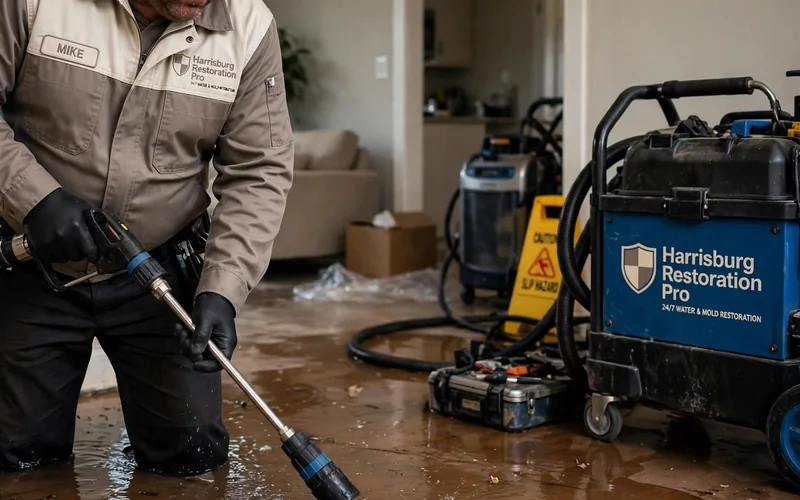
Pumps Move the Volume
Submersible and transfer pumps send deep water out through hoses to a proper discharge point. They do the bulk of the work in a flooded room.
Extractors Reach Into Materials
With the surface water gone, extractors and wands go to work on carpet, pad, and hard flooring beyond the pumps' reach.
Wet-Dry Vacuums Handle the Edges
Stairs, corners, and the gaps beside cabinets need smaller tools. Wet-dry vacuums collect what larger machines leave behind.
Meters Show What Remains
A room can look dry while walls and subfloors still hold water. Moisture meters and thermal imaging show what is left.
Places Water Hides After the Pooling Stops
- Between carpet padding and the subfloor
- Within the bottom of wall board and behind baseboards
- Under hardwood, laminate, and vinyl seams
- Behind kitchen and bath cabinets
- Inside insulation that holds water against framing
Water Extraction and Removal Near You in Harrisburg, PA 17104
Property owners in Harrisburg ZIP code 17104 and neighboring 17102, 17103, 17109, and 17110 can call us for extraction and removal. We work from Downtown to Allison Hill, Uptown, and across the river, with street addresses in each service ZIP code. Tell us your address and roughly how deep the water is, and we will explain the next steps.
How Extraction and Removal Works
Safety and Source Check
Before any pump starts, we look for electrical hazards and confirm the source has been stopped.
Bulk Water Removal
Pumps clear the pooled water first, which limits how much the structure absorbs.
Deep Extraction
Extractors work across carpet and hard surfaces, paying attention to padding, edges, and the strip along walls.
Moisture Mapping
Meters and thermal imaging mark what is still wet, which decides what dries in place and what comes out.
Handoff to Drying
Drying equipment takes over once extraction ends. Read how structural drying and dehumidification completes the job.
What We Remove and What We Try to Save
Carpet and Padding
After a clean-water loss, carpet may be saved when the water is removed promptly. The pad underneath is another story: it soaks up water, dries slowly, and is often replaced.
Hardwood and Laminate
Solid wood and laminate respond differently. Readings tell us whether boards can dry where they lie or whether lifting a few will speed things up.
Drywall, Plaster, and Baseboards
Wall board that has wicked up water can sag. If only the lowest edge is wet, one cut near the floor may let us dry the cavity and keep the rest of the wall.
Furniture and Contents
We help move wet items beyond the water and suggest what can be cleaned and dried and what should be discarded.
Mistakes That Slow Recovery
- Running a household vacuum over a wet floor
- Waiting a day to see whether things dry by themselves
- Walking across wet carpet and tracking dirt around
- Cranking up the heat before the water is removed
- Discarding damaged belongings before taking pictures
Questions to Ask Any Water Removal Company
Before hiring anyone, find out what gear they will bring, how they check moisture, whether they work to a standard like ANSI/IICRC S500, and what records they keep. Expect straight answers from us on all four, and see our emergency water damage restoration page and the frequently asked questions for more.