
Mold Remediation in Harrisburg, PA
Mold needs moisture, and water damage supplies plenty of it. A wet wall that never fully dried, a basement that stays damp after a storm, or a slow roof leak can all end with a musty smell and dark spots on a surface. Harrisburg Restoration Pro cleans up mold that follows water damage in Harrisburg homes, rowhouses, apartments, and commercial buildings. We contain the area, remove affected materials, clean what can be cleaned, and deal with the wetness that let the growth start.
Cleaning a stain without fixing the moisture only buys a short break, so the water problem is part of the job.
- 24/7 Emergency Calls
- Free Estimates
- Licensed and Insured
Signs You May Have Mold
- Fuzzy, speckled, or slimy spots in black, green, white, or gray
- An earthy, stale smell that keeps coming back after you clean
- Paint or wallpaper that bubbles, peels, or discolors
- Stains on ceilings, around windows, or under sinks
- Allergy-like symptoms that ease when you leave the building
- A past leak, flood, or burst pipe that was not fully dried
Mold can hide inside walls, under flooring, and above ceilings, so a clean-looking room does not always mean a clean cavity.
What Feeds Mold Growth
Water That Stayed Too Long
Materials left wet after a leak or flood give mold what it needs.
High Humidity
Basements, bathrooms, and poorly ventilated rooms hold moisture in the air.
Condensation
Cold pipes, windows, and ductwork collect moisture that drips onto nearby materials.
Hidden Leaks
A weeping pipe or a roof seam can keep a cavity wet for months without any visible sign.
Mold Remediation Near You in Camp Hill, PA 17011 and Harrisburg
Our crews serve Camp Hill, ZIP code 17011, and the neighboring West Shore communities, along with Harrisburg and the rest of our service area. If you have found mold at a Camp Hill property or anywhere across the river in Harrisburg ZIP codes such as 17102, 17104, and 17109, send us the street address and tell us what you see.
How We Approach Mold Cleanup
Inspect and Find the Moisture
We look for visible growth, take moisture readings, and trace the water source. Mold is not removed until we know what feeds it.
Contain the Work Area
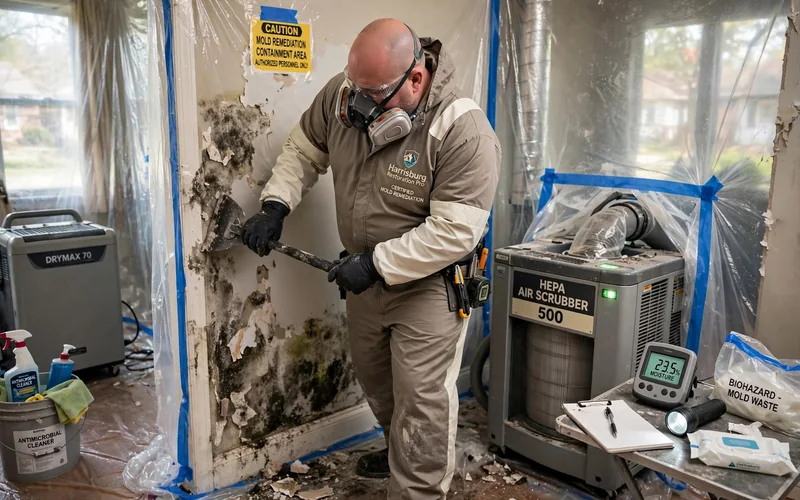
Plastic barriers and negative air control limit the spread of spores to clean areas while we work.
Remove Affected Materials
Porous materials, such as soaked wall board, insulation, or carpet, are cut out and bagged. Surfaces that can be cleaned are cleaned.
Clean and Dry
HEPA vacuums and damp wiping handle remaining dust, and air movers and dehumidifiers dry the area so growth does not return.
Check the Result
We confirm that the area is dry and clean, and we explain what repairs remain.
Where Mold Often Turns Up in Harrisburg Properties
Basements and Crawl Spaces
Older stone and block foundations in the area take on moisture, and finished basements can trap it behind walls and flooring.
Attics
A roof leak or poor ventilation leaves insulation and rafters damp.
Kitchens and Bathrooms
Supply lines, drains, and tub surrounds leak into cabinets and walls.
Rowhouse Party Walls
When water enters a shared wall, moisture can travel between units. Both owners may need to know.
Before You Hire Anyone for Mold Work
Ask every company about its training and credentials, what it plans to remove, how it will contain the area, and how it will address the moisture source. Some states regulate mold work and Pennsylvania rules can change, so ask the company what applies to your project. A written scope helps you compare quotes.
What You Can Do Right Now
- Keep the area dry. Fix leaks and run a dehumidifier if the air feels damp.
- Don't disturb it. Scrubbing or sanding spreads spores.
- Stay out of the room if the growth is large or you feel unwell.
- Photograph it before anything is cleaned.
- Talk to your doctor if someone has health concerns.
If Water Caused It
Mold usually starts with a water event. Our structural drying and dehumidification and basement water damage services deal with the moisture that fuels mold. We can inspect the damage and recommend the next step. Insurance coverage for mold varies, so check your policy.