
Water Damage FAQs in Harrisburg, PA
When water is in the building, questions come fast, and the answers are hard to find at two in the morning. These are the questions Harrisburg property owners and tenants ask us most. Every loss is different, so use the answers as general guidance and call us about yours. If water is spreading at this moment, start with emergency water damage restoration.
- 24/7 Emergency Calls
- Free Estimates
- Licensed and Insured
The First Hour
What should I do first if I find water in my home?
Move everyone out of harm's way, and dial 911 if someone is injured. Then stop the water at its source if you can do so safely, stay away from wet electrical items, and call us for the water and a plumber for the pipe.
Can I wait until morning to call a restoration company?
Every hour of waiting lets more water sink into floors and walls. A call is free, and we will help you decide how urgent your case is.
Should I shut off the electricity?
Only if the breaker panel is dry and you can reach it without stepping into water. Otherwise, stay away from the panel and phone an electrician or the utility.
Is it safe to walk through standing water?
Not when cords, outlets, or appliances are in it, and not if it might contain sewage or floodwater. Let a professional check the room first.
What should I photograph before cleanup?
Take wide shots of each wet room, close-ups of damaged items, the source of the water if you can see it, and any water line on walls. Short videos help too.
Should I start moving furniture?
Lift small valuables, papers, and electronics to dry ground. Leave heavy furniture to the crew, since wet floors are slippery and wet furniture is heavy.
Water Removal and Drying
What happens when your crew arrives?
We walk the property, check where the water went, and explain the plan. Then we extract standing water, set drying equipment, and record moisture readings.
Do you use moisture meters?
Yes. Meters and a thermal camera reveal hidden moisture, even inside walls and below floors.
How long will drying take?
It depends on how much water got in, which materials are wet, and the conditions in the building. We check readings each visit and tell you when materials reach a dry standard.
Why do you need so many fans and dehumidifiers?
Fans move air across wet surfaces, and dehumidifiers pull the moisture out of that air. Using both, in a closed space, dries materials faster than either one alone.
Can I use my own fans and a space heater?
Household fans may help a little, but they rarely dry a structure properly. A space heater near wet materials can be a fire risk, so please leave the drying to the equipment we place.
Will my carpet and hardwood floors have to be replaced?
Sometimes, not always. Carpet and padding that sat in dirty water usually go. Hardwood and other materials are tested, and we tell you what can dry and what cannot.
Basements, Sump Pumps, and Sewage
Why does my Harrisburg basement flood after heavy rain?
Saturated ground pushes water through foundation cracks, floor joints, and window wells, and a failed sump pump or clogged drain makes it worse. Older stone and block foundations often leak more.
Do you repair sump pumps or waterproof basements?
No. We remove the water, dry the space, and clean up. A plumber or waterproofing contractor handles the pump and the cause.
What should I do if sewage comes up through a drain?
Keep people and pets out, do not touch it bare-handed, and avoid using the plumbing. Call a plumber for the blockage and us for the cleanup.
Can I clean up sewage myself?
Sewage can carry bacteria and viruses, so we recommend leaving it to a crew with protective gear and the right disinfectants. If you must handle anything, wear gloves, boots, and eye protection.
Does homeowner insurance cover basement flooding?
Often not automatically. A lot of policies leave out flood and need an added endorsement for sewer or drain backup. Look at your policy or ask your agent first.
Who is responsible when a sewer line backs up?
It depends on where the blockage is. A private lateral running from your house is generally the owner's responsibility, while a problem in the public main falls to the sewer authority. A plumber can find the location, and in Harrisburg you can contact Capital Region Water about public lines.
Pipes, Water Heaters, and Roofs
What should I do about a burst pipe?
Close the main shutoff, open a low tap to drain the line, and stay away from wet electrical items. A plumber fixes the pipe, and we deal with the water.
Can I thaw a frozen pipe myself?
Gentle heat, such as a hair dryer on low or warming the room, is safer than a flame or torch. Never use an open flame. If the pipe has already split, shut the water off and call a plumber.
What if my water heater is leaking?
Close the cold water valve above it, and turn off power or gas only if it is safe to reach. If you notice a gas smell, get out and call 911. Then call a plumber and us.
Is a ceiling stain after rain a roof leak?
Often, yes, but a leaking pipe or condensation can also cause stains. Check whether the stain grows after rain. We can measure moisture, while a roofer inspects the roof itself.
Do you repair roofs or plumbing?
No. We handle the water damage that results. Plumbers and roofers fix the cause, and we tell you when you need one.
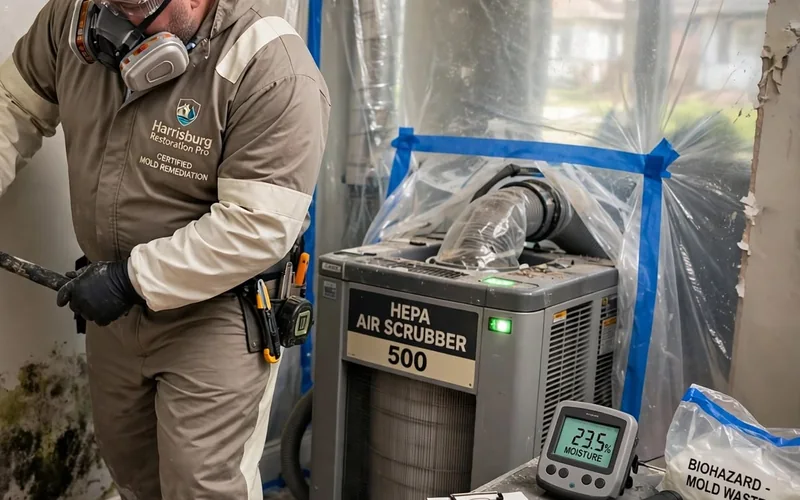
Mold and Safety
How can I tell if I have mold?
Look for fuzzy or speckled spots, a persistent musty smell, peeling paint, or stains that return. Mold can also hide behind walls, so a clean-looking room is not proof.
Can mold grow after water damage?
Yes, when materials stay wet. Fast, thorough drying lowers the chance, which is one reason we recommend acting quickly.
Do I need a license to hire someone for mold removal?
Rules differ from state to state and can change. Ask any company about its training and credentials, and ask what rules apply to your project in Pennsylvania.
Should I use bleach on mold?
We do not recommend it as a fix. Bleach does not address the moisture or the porous material under the surface, and mixing it with other cleaners can create dangerous fumes.
Will insurance pay for mold?
Coverage varies widely, and many policies limit or exclude mold unless it follows a covered event. Ask your insurer before work begins.
Insurance and Paperwork
Do you work with insurance companies?
We document the damage, hand over readings and photos, and can speak to your adjuster if you ask. Every coverage decision stays with your insurer.
Can you guarantee my claim will be approved?
No. Approval and payment are the insurer's decision, and nobody outside the company can promise the outcome.
Should I call my insurer before or after calling you?
Do both quickly. Do not wait for the insurer before you stop the water and start drying, because delay lets damage spread. Ask your insurer what it requires.
What records should I keep?
Photos and video, receipts, a list of damaged items, plumber invoices, and any messages with your insurer or landlord. Our moisture readings and daily notes can go in the file too.
Do you provide written estimates?
Yes. We put the scope and the price in front of you before any work starts, at no charge.
Are you licensed and insured?
Yes, and we can provide proof of insurance when your insurer, landlord, or property manager asks. Ask any company you consider for the same.
Rowhouses, Rentals, and Businesses
I rent my home. Who should I call?
Tell your landlord or property manager right away, since they usually control repairs and insurance. You can also call us, and we will coordinate with whoever authorizes the work.
Can you work with my landlord or property manager?
Yes. We keep notes for each unit and share readings and photos with the people who need them.
What if the water came from the unit above me?
Document the damage, tell your landlord, and call us. We dry your space and record what we find, and the question of who pays is settled between the parties and their insurers.
Can you work around my business hours?
Where it is safe and practical, yes. Tell us when you open and which areas must stay usable, and we plan around it.
Local Harrisburg Questions
Do you serve areas outside Harrisburg?
Yes. We cover nearby communities in Dauphin and Cumberland Counties, including Camp Hill, Lemoyne, Mechanicsburg, Steelton, and Hershey. Give us the address and we will check.
Who do I call if water is coming up in the street?
A break in the public main or a street flood is a matter for the utility or the city. Closing the main valve inside your home is often the fastest step for the building.
Should I call 811 before digging for repairs?
Yes. Pennsylvania requires a call to 811 before most digging, and utility lines may sit where you do not expect them. Your plumber or contractor should handle it.
Do rowhouses make water damage harder to deal with?
They can. Shared walls let water move between units, so we check both sides and recommend telling your neighbors early.
Do you work in older and historic homes?
Yes. Plaster, floors, and trim get tested before anything is removed, and what can dry in place stays in place.
Working With Harrisburg Restoration Pro
Are you available around the clock?
Yes, we take emergency calls day and night.
Is the estimate really free?
Yes. We give a free estimate and explain it before work begins.
What should I have ready when I call?
Your address, what happened, which rooms are wet, and whether the water might be sewage. Partial answers are fine.
How do I reach you?
Phone or email us, or send a note through the form on the Contact page.
Still Need an Answer?
Did we miss your question? Tell us what is going on, or browse our water damage restoration services.